

Split inference for real-time fault identification in drones
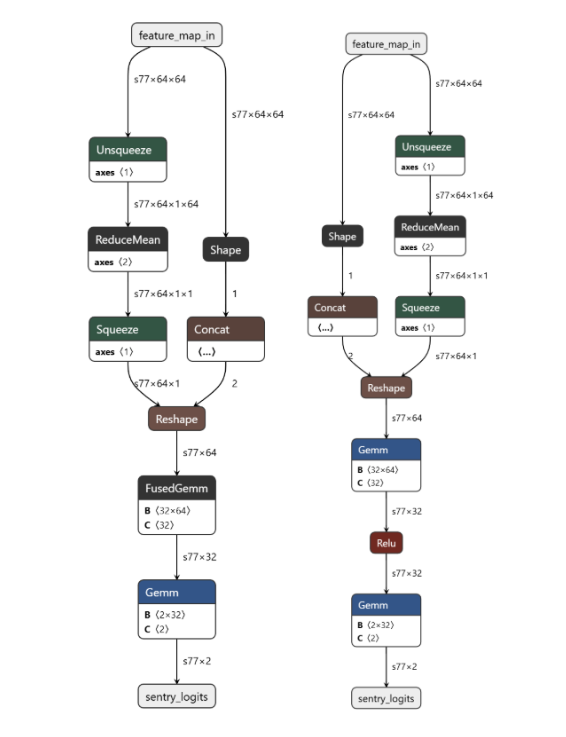
The following project describes the use of a split-inference architecture to help perform real-time fault classification for motor and propeller faults in drones using the HIL (Hardware in Loop) subset of RflyMAD dataset. The split-inference architecture was broken into 2 sections, a more complex Predictor model on a ground station, and a more simple Encoder and binary classifier model that ran on the drone itself. To help save bandwidth, the portion of the architecture on the drone only sends information to the Predictor model based on some pre-defined trigger logic. In addition to training the architecture using existing AI training infrastructure, the split-inference architecture was tested in a simulated dual process environment on a Raspberry Pi 5. The architecture was found to perform relatively quite well, achieving an overall accuracy of about 93.67% on the test dataset. Furthermore, the trigger logic allowed us to reduce the total number of data sent to the Predictor model by just under 50%. While the architecture performed quite well given the HIL portion of the RflyMAD dataset, the architecture and simulation could be improved to showcase a more practical system that engineers can incorporate into their robotics projects.